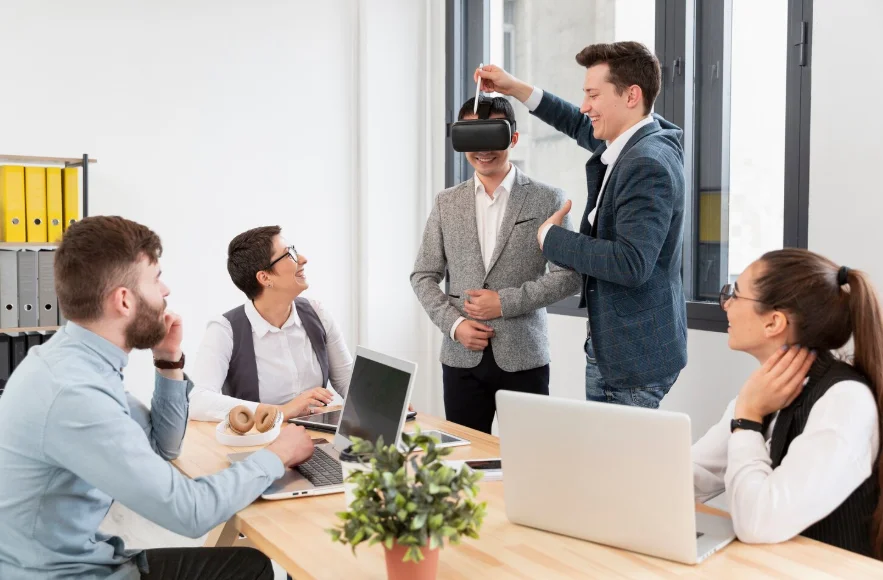
In today’s fast-moving business environment, building the right workforce is no longer just about filling roles—it’s about creating a dynamic, adaptable, and future-ready team. Companies that succeed are those that go beyond traditional hiring methods and adopt smarter, more strategic approaches to workforce development. Whether you’re a startup scaling quickly or an established organization navigating change, the way you build your workforce directly impacts productivity, innovation, and long-term growth.
So what does it mean to build a “smarter” workforce—and how can organizations actually achieve it?
What Is a Smarter Workforce?
A smarter workforce is one that is not only skilled but also agile, aligned with company values, and empowered by technology. It’s a workforce that evolves with business needs and leverages data, tools, and continuous learning to stay competitive.
Key characteristics of a smarter workforce include:
- Adaptability: Employees can quickly respond to changing demands.
- Skill-focused: Hiring and development prioritize capabilities over credentials.
- Technology-enabled: Teams use tools and automation to improve efficiency.
- Data-informed: Decisions are guided by insights rather than intuition.
- Employee-centric: Flexibility, growth, and well-being are prioritized.
This shift requires organizations to rethink traditional HR practices and embrace a more holistic, forward-looking approach.
Hiring for Skills and Cultural Fit
One of the most important steps in building a smarter workforce is refining how you hire. Instead of focusing solely on degrees or years of experience, leading organizations are prioritizing skills and cultural alignment.
Why this matters:
A candidate with the right skills but poor cultural fit can disrupt team dynamics, while someone aligned with company values is more likely to thrive and stay long-term.
Smarter hiring strategies:
- Use skills-based assessments to evaluate real capabilities.
- Incorporate behavioral interviews to gauge cultural fit.
- Focus on potential and learning ability, not just past roles.
Example:
A construction staffing company hiring site supervisors may prioritize problem-solving and leadership ability over formal qualifications. This ensures that the person can handle real-world challenges on-site, not just theoretical scenarios.
Leveraging Technology and Automation
Technology is no longer optional—it’s a core component of a smarter workforce strategy. From recruitment to performance management, automation can streamline processes and free up time for more strategic work.
Where technology adds value:
- Recruitment platforms to quickly match candidates with roles
- AI-powered tools for resume screening and candidate shortlisting
- Workforce management systems to track productivity and scheduling
- Communication tools to enhance collaboration across teams
Benefits:
- Faster hiring cycles
- Reduced manual workload
- Improved accuracy in decision-making
Example:
A logistics company using automated scheduling software can assign drivers based on availability, location, and workload—reducing downtime and improving efficiency without manual intervention.
Upskilling and Continuous Learning
A smarter workforce is not static. As industries evolve, so must the skills of your employees. Organizations that invest in continuous learning create teams that are more innovative, resilient, and prepared for change.
Key approaches:
- Offer regular training programs (both technical and soft skills)
- Provide access to online learning platforms
- Encourage cross-functional learning within teams
- Build a culture where learning is ongoing, not occasional
Why it works:
Upskilling reduces dependency on external hiring and boosts employee engagement. People are more likely to stay with companies that invest in their growth.
Example:
A mid-sized tech company trains its customer support team in basic product development concepts. This not only improves customer interactions but also creates a pipeline for internal promotions into product roles.
Embracing Remote and Flexible Workforce Models
The modern workforce is no longer confined to a single office or location. Remote and flexible work models have become essential for attracting and retaining top talent.
Advantages:
- Access to a wider talent pool
- Increased employee satisfaction and retention
- Reduced operational costs
Smart implementation:
- Use collaboration tools like video conferencing and project management platforms
- Set clear expectations for communication and deliverables
- Focus on output and results, not hours worked
Example:
A marketing agency hiring remote designers from different time zones can ensure 24/7 productivity, faster turnaround times, and diverse creative perspectives.
Data-Driven Decision-Making in HR
One of the most powerful ways to build a smarter workforce is by using data to guide decisions. Instead of relying on gut feeling, organizations can use analytics to optimize hiring, performance, and retention.
Key metrics to track:
- Time-to-hire
- Employee performance and productivity
- Retention and turnover rates
- Training effectiveness
How data helps:
- Identifies hiring gaps and inefficiencies
- Predicts employee turnover risks
- Improves workforce planning
Example:
An HR team notices that employees hired through a particular channel have higher retention rates. By focusing more on that channel, they improve long-term workforce stability.
Bringing It All Together
Building a smarter workforce isn’t about implementing one strategy—it’s about combining multiple approaches into a cohesive system. Organizations that succeed typically:
- Align hiring with long-term business goals
- Invest in technology that enhances efficiency
- Create a culture of continuous learning
- Offer flexibility to meet modern workforce expectations
- Use data to continuously refine their strategies
When these elements work together, the result is a workforce that is not just productive, but also innovative and future-ready.
Conclusion: Building for the Future
The way we build workforces is undergoing a fundamental shift. Traditional methods are no longer enough in a world defined by rapid change, evolving technologies, and shifting employee expectations.
The smarter way to build your workforce is to focus on adaptability, leverage technology, invest in people, and make decisions backed by data. Organizations that embrace this approach will not only attract better talent but also create teams that can navigate uncertainty and drive sustained growth.
As the future of work continues to evolve, one thing is clear: the smartest organizations are those that treat workforce building as a continuous, strategic priority—not a one-time task.