
The trucking industry is the workhorse of global business, and it is often unnoticed that there is a smooth flow of goods between manufacturers and consumers.
However, despite its paramount significance, the industry is going through one of the most turbulent periods in recent history. Economic pressures and technological disruption have put trucking companies and drivers in a tangled web of challenges that threaten their efficiency, profitability, and long-term sustainability.
Simultaneously, rising consumer expectations and changing regulations are putting an already-stressed industry under additional pressure. What then is causing these challenges, and why are these such a big deal at present?
This is vital not only to people in the industry but also to anyone who relies on punctual deliveries and a consistent supply chain.
Read on to learn!
1. Driver Shortages and Workforce Pressures
The shortage of qualified drivers remains one of the most pressing challenges in the trucking industry. While the issue has existed for years, it has intensified as experienced drivers retire faster than they are replaced.
Notably, fewer younger workers are entering the profession, creating a widening gap. This trend is consistently covered in trucking industry news.
As a result, firms are finding it increasingly difficult to fill vacancies, leading to delays and higher operational expenses. In addition, the lifestyle of long-haul trucking can be demanding, with long periods away from home, irregular hours, and physical strain deterring potential recruits. This has made retention just as significant a challenge as recruitment.
2. Rising Operational Costs
Trucking companies are also struggling with rising operational costs. Fuel prices are highly volatile and account for a large share of total expenses. Minor shifts can make big changes in profitability, particularly to smaller operators.
Moreover, the cost of maintenance and equipment has been increasing over the past several years. Modern, advanced trucks are more efficient; however, they are also more costly to buy and maintain.
There is also a rise in insurance premiums due to higher accident rates and claim costs. Collectively, these financial strains are putting margins under pressure and compelling firms to re-evaluate their strategies.

3. Supply Chain Disruptions
The other urgent problem of the trucking industry is the constant disruption of the supply chain. Global logistics networks have demonstrated resilience, but they still experience bottlenecks and inefficiencies.
Port delays, warehouse shortages, and uneven demand patterns drive an unpredictable environment.
As a result, trucking companies often struggle with scheduling and route optimization. Drivers can spend hours in line waiting to load or unload cargo, which slows productivity and frustrates them. These inefficiencies, in their turn, spread to all the attributes of the supply chain, both to business and to consumers.
4. Regulatory and Compliance Challenges
Regulatory requirements are becoming increasingly complex. Governments are also enacting more stringent regulations regarding safety, emissions, and working hours.
Although these rules help raise industry standards, they also introduce an additional regulatory burden that businesses must navigate.
An example is electronic logging devices (ELDs), which have enhanced visibility into the time drivers spend on the road but have weakened flexibility.
Additionally, the environmental laws are compelling firms to use cleaner technologies that, in many cases, are expensive to acquire. The balancing of compliance and profitability is thus a delicate exercise that must be looked into at all times.
5. Technological Disruption and Adaptation
Rapid technological advances are transforming the trucking industry. Automation, artificial intelligence, and telematics are among the innovations expected to enhance efficiency and safety. Nevertheless, these technologies are costly and need training to be adopted.
To most companies, technological change can be daunting. The future of automation is also unclear, especially as autonomous trucks are created. Although such developments would ease driver shortages, job displacement, and regulatory preparedness are also issues of concern.
6. Environmental Concerns and Sustainability
Over the past few years, the trucking industry has made environmental sustainability a priority. Companies are under increasing pressure from governments, consumers, and advocacy groups to minimize their carbon footprint. This transition is leading to the use of alternative fuel, electric trucks, and efficient logistical practices.
Nevertheless, the process of switching to more environmentally-friendly solutions is not devoid of challenges. In the case of electric trucks, the charging infrastructure is also large and is not yet developed in most areas.
Moreover, the original price of such cars is prohibitive. Nonetheless, the sustainability push will not diminish in the short term, thus becoming one of the most vital areas of concern for the industry.
7. Infrastructure Limitations
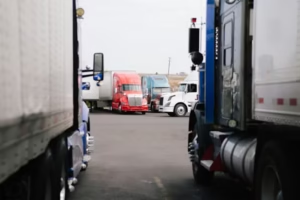
Infrastructure constraints still impede the trucking industry’s efficiency. Old, congested roads and a lack of parking spaces present daily challenges for motorists.
Not only do these problems increase travel time, but they also lead to greater fuel consumption and vehicle wear.
Moreover, there are no proper rest zones, which is also a safety issue. The drivers even have a hard time finding safe, legal parking during peak hours. The current infrastructure gaps need both massive investment and collaboration between the state and non-state sectors, which may take several years to materialize.
Conclusion
The trucking industry operates in a complex, rapidly changing environment characterized by a variety of challenges. Driver shortages and rising costs, technological disruption, and environmental requirements each pose challenges. However, the challenges are also opportunities for innovation and development. Those companies that have embraced change, invested in their human capital, and are sustainable have a greater chance of succeeding in the long term.